Every morning around 11 o’clock, our domestic helper used to come, do the dishes, sweep and mop the floor and sometimes make an effort to dust, every time we prod her. Many times, we would spot incomplete work – not cleaning the corners, not wiping windowpanes, etc.
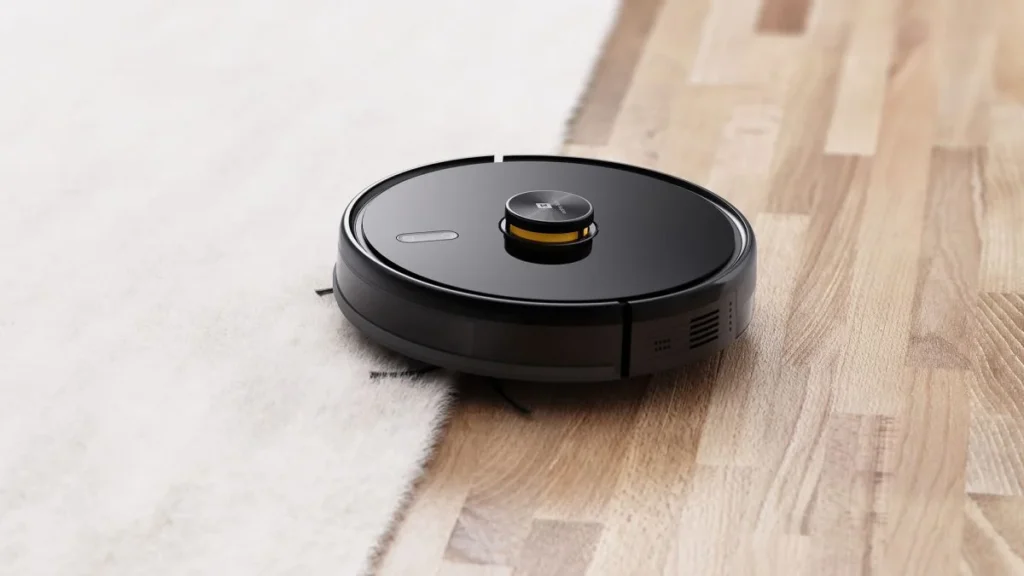
One day, frustrated, we fired her and replaced her with a robot mop. The robot mapped our home and from the next day, it started sweeping and wiping the floor. We scheduled it early in the morning such that as we woke up everything is spic and span.
Some of the readers would find the treatment towards the domestic help harsh. But we took this decision with a lot of consideration. We employed her with a good salary but did not get the results we wanted. We used to be annoyed at her and she would pass the day in nonchalance as if nothing happened. As my wife says, it was an arrangement where “we paid her and in return lose our calm”. So, in any rational situation, this did not make sense. The robot mop, on the other hand, is better if you consider long-term costs and benefits.
Robots Are Rising
I know many people who have switched from domestic help to robot mop. Some have even bought dishwashers. A rise in the robot vacuum cleaner market and the termination of more domestic helpers should not surprise us. As per research from Counterpoint’s Smart Home IoT Service, India shipments of the same grew 24% YoY during the January to June 2022 period. It is estimated that this market will grow by more than 40% CAGR for the next five to six years.
Researchers from Ochanomizu University and the University of Oxford found that an average of around 40% of domestic work, including unpaid housework like cleaning, cooking, taking care of families, etc. can be automated in the next 10 years. Common people employing automation (or capital) over humans (or labour) is a big change. It seems reasonable from a personal comfort but alarming from a societal aspect, especially in a labour-abundant market like India.
India has more than 40 lakh domestic helpers, about a tenth of total salaried employees. The automation of household chores will have an impact on their lives in the next few years. The government, civil society, NGOs and worker unions must think about this evolving scenario. What will happen if even one-third of them lose their jobs?

A Maid’s Job
But before understanding the impact of automation, let us first understand the basics of this job.
It is a manual labour that deals with dust, dirt and filth. They are neither passionate nor happy to do it. They have to do it out of compulsion, desperation and poverty. They usually don’t get paid leave. Neither do they have pensions, gratuity or perquisites. Most people discriminate against them, sometimes direct and sometimes in subtle ways. Therefore, it becomes difficult to incentivise them for better quality work.
At the same time, they face physical and mental abuse, get lower wages and low dignity. As per an NSDC – KPMG report, 60% of them have studied until Class 5, 65% of them are in the prime working age group of 27-40 years and more than 70% of them earn less than Rs. 2000 a month.
Comparing Earnings
The report states that domestic helpers do not get paid according to standard minimum wages. All-India minimum wages for 2023 for unskilled cleaning activity range from Rs. 14k to Rs. 22k per month, depending on the area. For the state of Maharashtra, the rates are around Rs. 15k. These rates are prescribed for industries and government bodies, where compliance is higher. The report states that on average, they earn Rs. 6k a month, less than half of the minimum wages prescribed by the government. There is no government body that ensures that domestic helpers earn a consolidated amount according to rules.
In countries like Hong Kong and Singapore, domestic helpers get Rs. 23k-30k. In Singapore, employers (i.e. us) must provide benefits such as a weekly rest day, accommodation, medical care and insurance. In the US, overtime pay of 1.5x of the regular rate is mandatory if the worker works for more than 40 hours in a week. Strong laws and their implementation make the lives of domestic helpers better.
Legal Protection
Progress on the legal front in India has been slow but much of the work is in progress. For example, the National Policy on Domestic Workers has been formulated but is awaiting a Cabinet nod. Some states have included domestic workers under the unskilled category for many state-led initiatives. Rashtriya Swasthya Bima Yojana, a government-sponsored health insurance scheme, has been extended to domestic workers. But a lot needs to be done.
If passing laws and implementing them should become the top priority for the central and state governments, then providing infrastructure and avenues of training should become the second.
Skills and New Trends
Domestic helpers don’t have avenues, resources and networks to up-skill themselves to compete with changing demands or the robots. Therefore, we can try a couple of things. Assuming urban economies continue to flourish, demand for workers will also keep on rising. But, at the same time, the job profiles will change.
India is ageing and in these changing times, we need more people in the elderly healthcare segment. Even if we assume an automation of cleaning jobs, the workers can switch to taking care of senior citizens. This job demands patience and nursing skills, which makes it a high-paying job. Similarly, childcare services cannot be automated and thus, that job is also safe. With rising incomes and sales of luxury homes, we will need people to manage and upkeep our homes.
Everyone should adapt to changing times and if someone’s job is at risk, then that person should think of it even more. But that is easier said than done. Training becomes important in such circumstances. India does not have any mechanism to train them yet. We need to start thinking about it and hope that new legislation gives some solution in that direction.
The KPMG report has suggested some steps that seem more like an MBA-type approach and less practical. Nevertheless, the report has the latest figures and some market research which is useful.
Cooks Ace
In the last two years, my wife and I have trained our cook to make continental and newer dishes or more customised traditional meals that suit our tastebuds. The training was not a one-time activity. One needs to nudge and interfere so as to eat a tasty meal. After teaching every new dish, we used to think of ideas for creating a pool of best practices or training kits for domestic workers. We never came up with that but would like to think about it.
We realised that the cook was more essential as it involves a lot of skills, unlike cleaning, mopping and dusting activities. Even though we can now buy a dosa printer or curry maker, it will take years for a single machine to make all the dishes we want within an hour. If that happens, then we can think of firing cooks. Until then, I believe that nothing will replace a cook.
Final Thoughts
If we can rationalise our own steps to automate household chores by doing a basic cost-benefit analysis, then we cannot dismiss the business’ urge to automate everything and reduce dependence on human labour. We detest businesses for thinking along the same lines when our jobs are at risk. But we are, in a way, replicating what they have been doing for past centuries.
No domestic helper wants his or her children to follow the same job. They want them to study and do a regular job. Economic growth along with job creation can do marvels by uplifting people off their social strata. Thus, we need job-creating growth that can employ these children and fulfil the dreams of these millions of domestic helpers.
I am of the opinion that automation can enable different job opportunities for everyone who is willing to learn. But what if people are not willing to learn or are incapable or inept? Then, in such cases, this becomes an ethical, social or philosophical question rather than a simple economics question of cost-benefit analysis.
I still believe that in the long term, everything will be alright. It is the short term that haunts.
– Swapnil Karkare
If you liked this, share the shortlink of the article –
https://wp.me/p8aKIW-W4
Sources and Further References:
Counterpoint’s Smart Home IoT Service Research on Robotic Mops
Around 40% of domestic tasks could be automated in 10 years, study finds, Japan Times